 Lasting Memories

Anita Burdman Feferman
July 27, 1927-April 9, 2015
Stanford, California
Anita Burdman Feferman died peacefully at the age of 87 in hospice care at her home, to the surprise of many who thought her invincible. Professionally, she was noted as the author of two highly praised biographies, and personally as a vibrant, stylish, athletic, direct, spontaneous, engaging and engaged human being. She was a loyal friend to young and old; to her family she was sine qua non as a loving and caring wife, mother and grandmother.
Born in Los Angeles, Anita Feferman attended Hollywood High School, UCLA and the University of California at Berkeley, from which she graduated in 1948 with a B.A. After working as a teacher on a pediatric psychiatric ward in San Francisco she returned to the university in Berkeley for a degree in education, and then taught to her constant satisfaction in the Oakland elementary school system. In 1956 she moved to the Peninsula with her husband Solomon Feferman, who had just joined the faculty of Stanford University in the departments of mathematics and philosophy. They came with two very young daughters and so Anita traded teaching for raising a family.
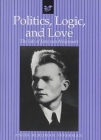
Always a serious reader and natural storyteller, in her 40s she took writing courses at Stanford and began her writing career with a number of short stories and interviews. It was also at Stanford that she became an early and active member of a notable biographers' seminar initiated by Diane Middlebrook and Barbara Babcock. Anita Feferman?s first biography was "Politics, Logic and Love: The Life of Jean van Heijenoort" (reprinted in paper as "From Trotsky to Gödel"), published in 1993. That was followed in 2004 by "Alfred Tarski: Life and Logic," co-authored with Solomon Feferman. Each of these books dealt with a passionate, complicated man whose life and career was directly bound up with major historical events of the '30s and '40s, the first, a revolutionary who ended up as an esteemed scholar of logic, and the second, one of the most important logicians of the 20th century and leader of a new school in logic at Berkeley. Both biographies were acclaimed for their engaging and revealing storytelling deepened by full explanations of their historical context and the nature of the scientific contributions involved.
Over the years, Anita and Solomon traveled widely, especially during his sabbatical years when they resided in Princeton, Cambridge (Massachusetts), Oxford, Paris, Florence and Rome. Besides the pleasure they took in expanding their cultural horizons, they formed many new friendships in the process, enhanced by Anita's fearlessness with new languages and her endless curiosity about people. When at home, Anita enjoyed playing tennis competitively, ran and swam, treasured her work in the garden -- lush with flowers, fruits, vegetables and herbs -- and was famed for hosting memorable and convivial meals.
Anita Burdman Feferman is predeceased by her daughter, Rachel Feferman, and is survived by her husband, Solomon Feferman; daughter, Julie Feferman-Perez; and granddaughters, Isabel Feferman-Perez and Graciela Feferman-Perez.
Sept. 13, 2016
Now, in memory of Sol: Sol was my undergraduate academic advisor, and wrote a letter of recommendation for my successful application to the Stanford MLA program. When I informed him of my acceptance, and thanked him for his support, he replied, that with my academic record it had been a foregone conclusion. I took care of his mother ( who lived into her 90s ) during my days at Kaiser in Los Angeles, and greatly enjoyed the 2 books written by his wife Anita, one of which ( Alfred Tarski ) he co authored. Harold Levine is now my last faculty connection to the Stanford Math dept.
July 13, 2016
May 30, 2015
I first heard of Anita in the 60's when I was working on a Ph.D. under Tarski and she was rumored to be a striking beauty whom Sol was lucky to have married. When I saw her I realized that the rumor was more than justified, yet did not do justice to the combination of beauty wit and strength that she represented. Our paths crossed occasionally during the years. In the later period of her life I saw her more often. She and Sol interviewed me, as they gathered material on Tarski, for their book. Since then my wife and I spend time with them whenever they visited New York. I always was struck by her remaining beautiful; whatever the years took was more than compensated by her kin lively interests, and the intelligence and character that shone through. I saw her when the cancer was already taking its toll. She needed a cane for walking, but maintained a straight posture, not giving an inch more than what absolutely necessary, smiling and beautiful as ever. She was one of those people whose disappearance is a real loss, no matter what age they are.